
Fela Kuti: Fear No Man
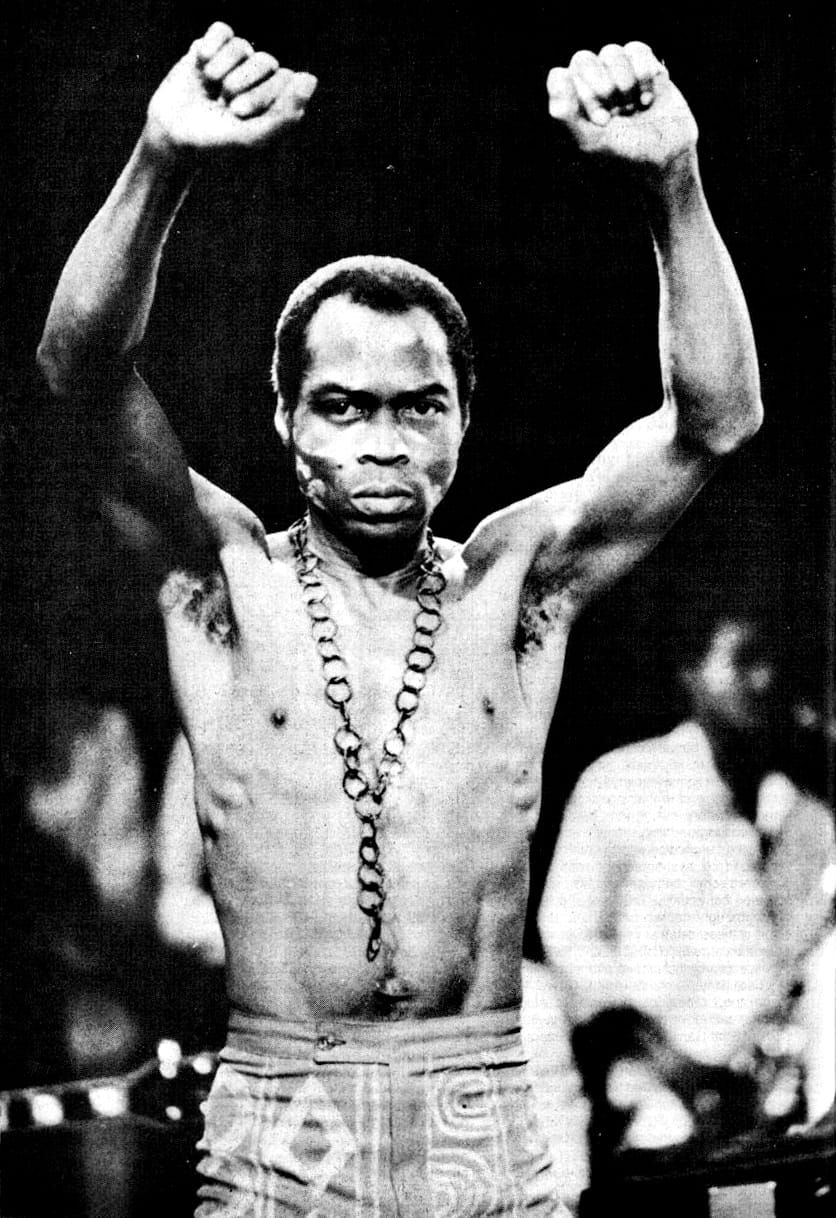
For music lovers, one of the greatest experiences you can have, whether you’re dropping the needle on a new album or pressing the big ‘green’ button on Spotify, is a no-skips listening experience.
Meaning every track fits together tighter than a puzzle.
Jad Abumrad’s podcast series, “Fela Kuti: Fear No Man,” provides that feeling as part of the storytelling and listening experience. This 12-part series, with an extra bonus episode, accelerates with episode 2, “Becoming Fela,” and concludes with an exploration of his legacy in episode 12, “Bloodline Covers.”
Along the way, you are introduced to select members of his band, Africa ‘70. Three young men who are now in their sixties that helped Fela build up his political movement. Plus ‘The Queens,’ his dancers and the women closest to him, and his oldest biological children.
Individually and collectively, each one brings their recollection of their experiences with a rebel, a musical giant, and a man who lived without fear or compromise.
Fela Kuti, the King of Afrobeat.
The Influences That Launched the Transformation of Fela
Of course, there are listeners who haven’t got the stamina to stick around for the long haul. Life’s busy. You know who you are.
If that’s you, the must-listen episode for all is episode 2, “Becoming Fela.”
Abumrad opens by presenting the teenage Fela. A young man with enormous talent and charisma.
In the mid-1950s, he arrived at Trinity College London. Fela’s there to learn classical music structures of all things. Can you imagine?
Later on, in one of his earliest interviews, Fela recalled being there with limited interest in classical music. Bebop and modal jazz pulled at and mesmerized him.
Miles Davis had his ear.
It’s 1959 when Davis released one of the pinnacles of jazz, Kind of Blue. To ensure we don’t miss how much Kind of Blue influenced Fela, Abumrad had us listen to a song Fela recorded with his band in the 1960s that sounds an awful lot like "Freddie Freeloader."
Abumrad pushes the timeline forward. Next thing we know, it’s 1967, and Fela and his band are working around Lagos. They’re playing what’s termed a jazzy form of Nigerian highlife music.
They’re good. But the rebel we know performs dressed in nice suits. Think of Davis and John Coltrane during the era.
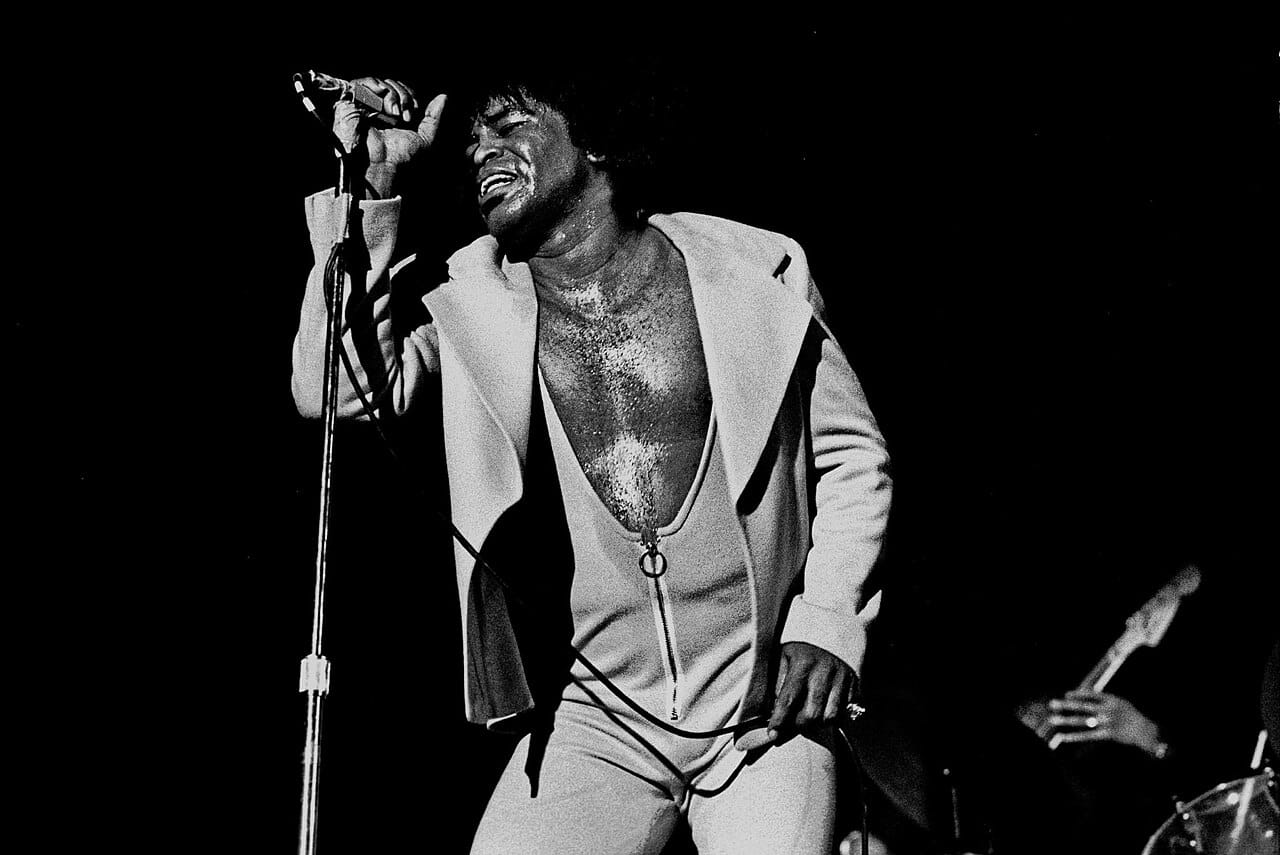
Fela’s next awakening comes in the form of James Brown and the Famous Flames.
Brown’s on the early side of a decade of soul and funk classics. Brown released funk unlike anything heard before. I’m talking hits like:
- “Cold Sweat”
- “Give It Up or Turnit a Loose”
- “Funky Drummer”
- “I Got the Feelin”
The thirst for soul and funk grows in Lagos. Due to Soul Brother #1.
Fela, well, Fela recognized the African rhythms driving everything underneath Brown’s music.
Phase one of his own transformation begins.
By the time an offer arrived for a 10-month tour across the US in 1969, the jazzy highlife sound had disappeared. His musical soundscape had evolved into a blend of African rhythms, funk, and jazz, with horns punctuating his grooves.
What’s still missing?
Fela’s authentic, rebellious, sometimes comedic, but political voice isn’t there yet.
Two months after the tour started, it ended. The shows aren’t selling. The bands broke. A chance meeting between Fela and Sandra Akanke Isidore, a black woman in Los Angeles, who goes to see one of Fela’s shows at a friend’s insistence.
Two souls collided, and a spiritual connection happened that sparked Fela’s next level of transformation.
The American Awakening: Malcolm X and the Birth of a Titan
Envision this. It’s 1969, and you’re in America for your first time ever. The social media-soaked world we live in today doesn’t exist. Fela’s a bit worldly. He spent years at Trinity College in London.
However, he knows precious little about Black Americans and our culture. His biggest exposure to our culture comes through absorbing jazz, soul, and funk.
Now, let me turn the tables. It’s 2026, you’re a Black American with Southern family roots. You personally grew up in the East, maybe the West.
You’re no stranger to Nigerians as a New Yorker or a DMV-native.
But ask yourself, “What do you really know about what goes on in Lagos, just cause you’ve crossed paths with Nigerians?”
If I snatched away your Instagram and TikTok accounts, and YouTube, what the hell would you really know?
My friends, that’s Fela in 1969 running the streets with Isidore.
She exposes him to the Black Power movement, the Black Panther Party, and the powerful and lasting words and ideas of Malcolm X.
Millions of lives over the last 60 years have been radicaclly changed by simply reading The Autobiography of Malcolm X. For Fela, it was like going back into his mother's womb and coming back out anew.
He was never the same.
“Everything fell into place for Fela after reading Malcolm X,” said Abumrad.
His evolution and transformation are completed. In the 1970s, Fela became James Brown, Malcolm X, Bob Marley, and Muhammed Ali, rolled up into one person.
Fela begins taking on an almost mythical quality, an invincibility.
The True Cost of Rebellion: Key Episodes from “Fela Kuti: Fear No Man”
There are many standout episodes in “Fela Kuti: Fear No Man.”
Listeners will enjoy the craftiness and heroics detailed in episode 4, “Vengeance of the Vagina Head,” which is centered around Fela’s mother, Funmilayo Ransome-Kuti.
A woman who established the Abeokuta Women’s Union in the 1940s to confront unfair and burdensome taxes on the market women in her community.
Abumrad shares some of the never before seen tactics she used to fight back against the unfair taxes driven by colonialism during that time period. Her tactics yielded success and were eventually copied by others in different places.
We hear the personal stories of three different members of ‘The Queens,’ the dancers performing with Fela and his band for decades, and each goes into their rather complicated relationship with him.
An entire episode is dedicated to his most known song, “Zombie.”
A protest song that triggered many facets of fallout with the Nigerian government after being released in 1977.
We’re talking about numerous encounters with the Nigerian military. The consequences of his songs and words came in the form of beatings, broken bones, and the burning down of the Kalakuta Republic, his home.
While in the process of invading and burning his home to the ground, they even threw Fela’s mother out of a second story window. Let’s be clear here.
We’re referring to his mom, a woman in her mid-70s at the time. She happened to be there when the raid occurred on his home and they didn’t give a second thought to chucking her out the window.
Ransome-Kuti never recovered from her injuries and died a year after the raid.
His Biological Children Called Him Fela
To wrap your mind around and grasp the complexity of Fela, you must listen closely to the stories of his children. They become the main voices in the series by episode 10, "Death in His Pouch," and in the final two episodes.
His oldest child and daughter, Yeni Kuti, and Femi Kuti, his oldest son, recall their utterly bizarre lives inside the walls of the Kalakuta Republic, a commune where the smell and use of cannabis were as common and natural as drinking water.
Fela preferred minimal attire at home and regularly stripped down to his underwear, staying that way. Yeni and Femi both remembered not being allowed to call him dad.
They each called him Fela. No special treatment for biological children.
In fact, Yeni said he viewed his band as his real family. While Yeni still feels deep love for her dad, in a moment of honesty in the midst of discussing his legacy, she tells Abumrad, “He never should have had biological children.”
Femi makes it clear in various parts of the interview that his approach to being a father primarily involves doing everything opposite of how his father raised him.
During different parts of our lives, we have moments where we’re asking ourselves, or possibly someone else asks us, “What is the most important thing in the world to you?”
Later in life, that question might change to, “What do you want your legacy to be?”
Most, perhaps even the majority, would respond to those questions with two words – my children.
There’s no chance Fela would have used those two words.
He wanted to break Nigeria free from the tentacles of colonialism. He was out to use his music to effect real, lasting change and to fight the systems holding the masses back.
The trophy for “Best Dad Ever” wasn’t part of his mission.
Listen or Take a Pass
I’d urge you to do yourself a favor and listen to this series.
You have both a towering piece of journalism and a real reminder of the power of music to change the world.
Fela, a fearless rebel demonstrated how much power exists in protest music. We haven’t heard meaningful protest music since the 1970s.
During the 1980s, there were songs like, “We Are The World,” and other songs like that written to bring us together.
Obviously, there’s nothing wrong with us coming together. But, there’s no doubt that the time for massive protest and grassroots efforts arrived with one recent presidential inauguration.
Fela should serve as an inspiration to others with similar talents and fearlessness.
In my lifetime, the artist who exhibited a similar fearlessness and recklessness, and had the potential to morph into a force like Fela – Tupac Shakur. ■
© Ink & Audible
From Higher Ground Audio and Audible Originals comes an epic new documentary podcast from Jad Abumrad, creator of Radiolab and Dolly Parton’s America.
In a world on fire, what can art do? Fela Kuti: Fear No Man explores the life, music, and radical spirit of the Nigerian icon who invented Afrobeat — a sound that fused funk, jazz, and resistance into one of the most explosive musical movements of the 20th century.
Listen on YouTube: Fela Kuti: Fear No Man






.jpg?ref=inkandaudible.com)
Member discussion