
All About Love
Most men, if we’re being honest, hear the word “patriarchy” and it makes them uptight.
It’s become a loaded word. One that practically sets the stage for how you’re perceived based on your audience of listeners, and where you happen to be when the word exits your lips, or shows up in one of your social posts.
Trust me when I tell you that it’s happened to me.
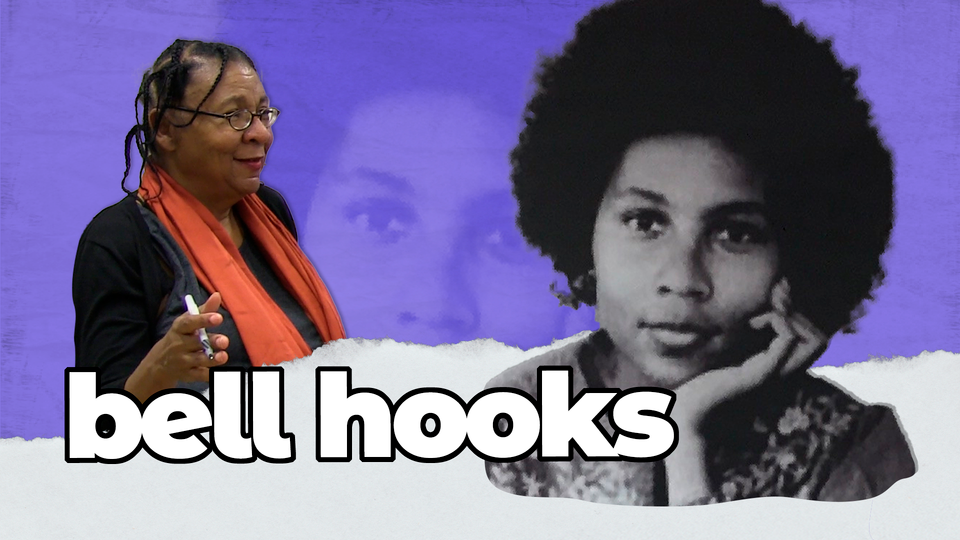
But here’s the thing: after reading bell hooks's “All About Love,” I realized my understanding of patriarchy isn’t comprehensive enough.
My understanding has existed at the same level of understanding that white Americans today exhibit when they talk about slavery and racism.
They know slavery existed and it’s the foundation for inequality at all levels of our society to this day, while steadfastly holding to the idea that they had nothing to do with it, and anything to rectify it in our modern society is straight up out of their hands and unfair to them.
Patriarchy exists at the exact same intersection.
Waking Up to Subconscious Patriarchy
Men, especially those who are comfortable with their wives and girlfriends working, working and striving every bit as much as them, are convinced that they’re not part of perpetuating the system of patriarchy.
You’re reading the words of someone who was convinced and couldn’t see where my actions were doing anything to hinder any women from those directly in my life to those outside of my life from pursuing their dreams.
In my mind, I was the poster child for fairness and impartiality.
So when I was asked earlier this year, “What are you willing to do to be rid of all forms of patriarchy?”
I was baffled.
“How do I play a role in getting rid of something that I’m not even maintaining?” I thought.
Two months passed after reading that question and thinking deeply. Then I ended up circling back to the words of hooks.
“Observing his struggle, I saw how little support men received when they chose to be disloyal to patriarchy.” bell hooks
We’re blind. We truly can’t see our role in bolstering patriarchy. Become more aware of the subtle and subconscious things you do to support patriarchal thinking.
There’s a quiet sneer, an unspoken judgment men pass, including me, on other men who don’t choose to follow the path that translates to being the aggressor in the relationship, and the breadwinner.
Real men are supposed to desire money and power.
Men willingly forgoing careers to stay at home raising the kids aren’t powerful. They’re perceived as lesser by the overwhelming majority of men, and frankly, most women.
Only knowing someone closely who fell out of the job market years earlier and by having the chance to watch how he raises his daughter up close have I been able to shift my long-held views.
There’s a deep and amazing bond between him and his daughter.
For too long, one of my first questions whenever we got together went back to asking what he was doing in order to find a new job. It simply didn’t occur to me that he didn’t want to find a new job.
Breaking patriarchy can start with earnestly looking deeply at the beliefs you hold close to challenge what you think and believe when it comes to the roles of men and women. In my generation, Gen X, most of us were raised with the traditional beliefs practiced in churches and a capitalistic society.
Can you find ways to extract what’s most valuable from those beliefs and practices, but turn those beliefs on their head and still see real power and value in a couple that’s living the exact opposite way of what you’ve been taught?

The Problem Runs Deeper Than Men vs. Women
“All About Love” and hooks help the average man, like me, see that patriarchy isn’t what it appears to be on the surface. A battle for power between men and women.
“Patriarchy, like any system of domination (for example, racism), relies on socializing everyone to believe that in all human relations there is an inferior and a superior party, one person is strong, the other weak, and that it is therefore natural for the powerful to rule over the powerless.” bell hooks
In a nutshell, that explains the history of racism, patriarchy, and capitalism in America.
It’s always a zero-sum game.
We’re living in the land of winners and losers. There’s no in-between. The institutions and political systems capable of supporting slavery in America for hundreds of years still remain all in with capitalism and the concept of inferior human beings should be dominated by superior human beings.
Additionally, it explains what’s happening inside the private residences of millions of citizens once the doors leading into apartments and homes are closed.
The fight to determine who “wears the pants” begins.
The Great Divide Didn't Happen Overnight
It’s hard to pinpoint exactly where the tipping point occurred, but I’ll point to the 1970s as the decade when traditional women began to evolve into modern women.
The women entering the workplace in the 1970s were entering with the desire to build long-term careers that wouldn’t end the moment they had their first child. That’s the separator from decades past.
If we could hypothetically go back and survey 500 men and 500 women, all with careers at the time, we’d likely find that 80% held traditional values and beliefs.
Even if the percentages weren’t exactly parallel, I believe they’d be in the same ballpark. Today, if you were to conduct the exact same survey, with the exact same number of men and women – let’s forget about race or nationality, just keep it random – where do you think those percentages would be?
The modern man exists.
The exact definition of a modern man varies dramatically depending on who you’re talking to. But let there be no doubt about one thing – he sits comfortably in the minority.
How do I know?
I’m there in the barbershop and all other places men congregate and dwell when the conversation comes up. Most men are still traditionalists at heart.
That’s true whether I’m talking to guys in my age group or hearing from men 25 years younger than me. Of course there’s a host of other factors at play. Those factors must be considered too.
However, when you look at values and beliefs, I’d guess only 30 percent of men could be considered modern men.
Meanwhile, when the coin flips over to the other side, you’re likely to find the majority of women, possibly somewhere in the range 70 percent, are modern women.
Can you see why friction and the power struggle remain so real?
Men are easily a generation, possibly two generations, away from meeting modern women where they are.
Feels like I just drowned the baby in a pool of hopelessness.
One of the things hooks repeatedly pointed to in “All About Love,” and one of her reasons for writing the book itself, was the cynicism she could see and hear among college students entering her classes back in 1999, when her book was released.
“Youth culture today is cynical about love.” bell hooks
Imagine what hooks might think and say today, some 25 years down the road, and an entire generation (“Hello, Gen Z”) has been raised by hooks' cynical students.
The Hard Truth About How Little We Understand Love
As a reader picking up this book for the first time, you’ll be less than 50 pages in before you’re totally convinced of two things: (1) hooks thought long and hard about love prior to writing this book, and (2) you haven’t.
Most of us are operating on what we’ve been taught, told, seen, and directly experienced growing up in our own dysfunctional families. Then combine that with the Hollywood fantasy sold to us by all forms of media.
We expect to fall in love. We expect love to be easy.
Hooks offers a quote in the first chapter, attributed to a different author from her period of research: “We use the word love in such a sloppy way that it can mean almost nothing and absolutely everything.”
Think back on the relationships, friendships, even some family members who have been involved in your own life, and you can see the truth in those words.
Worth the Read
“All About Love” is an important read. Particularly for men like me who haven’t read bell hooks before and are open to broadening their perspectives.
Though this book was written over 25 years ago, hooks’s point of view remains as fresh today as it was when the book was published, and the very issues she raised in her writing then have only deepened with time.
Cynicism, lovelessness, isolation, and a deep sense of hopelessness have deepened, and her guidance just might open a new door for those willing to challenge themselves and take a new direction. ■
© Ink & Audible
I am part of the affiliate program with Bookshop.org. If you decide this book is a must read for you, the link below will allow you to purchase “All About Love.” I may earn a commission at no extra cost to you.


If you haven't discovered it yet, Ink & Audible also exists as a YouTube channel. On there, you'll get different takes on book reviews, podcast reviews, and increasingly different pieces of social commentary.
As part of a playlist known as "The Book's Most Important Question," I covered "All About Love."




Member discussion