
Tough Cookie: The Wally "Famous" Amos Story
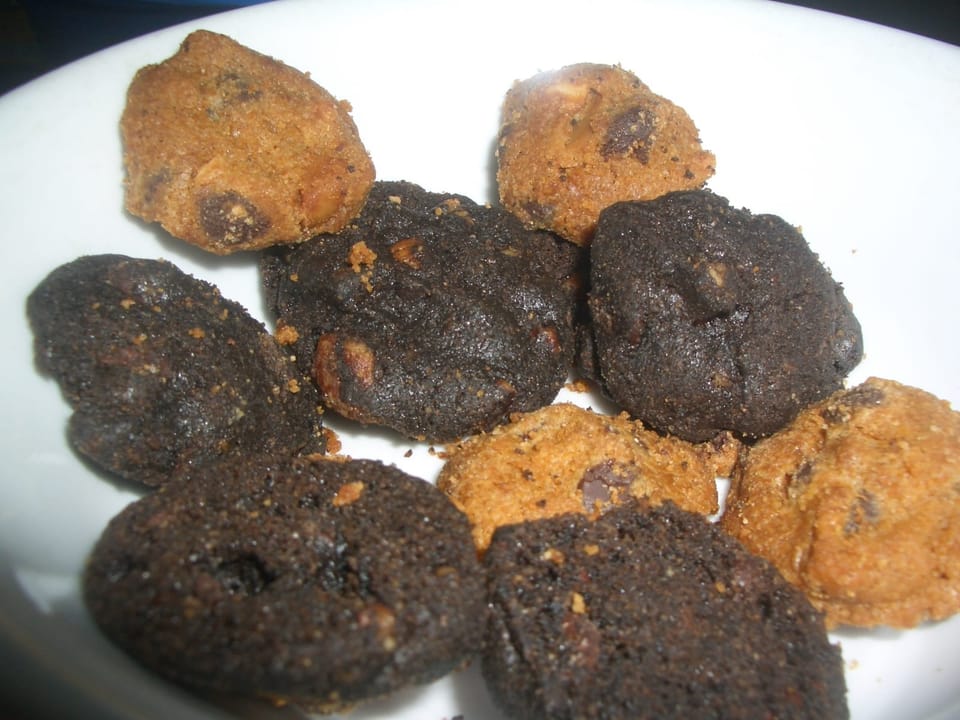
There’s a method I use periodically to judge how interesting a podcast actually is. This method is foolproof.
It involves my kids. I wait until we're inside my car, comfortably riding along, and then I press play on the first episode of a brand new podcast.
One of two things will happen in a matter of five minutes or less. They’ll start randomly commenting on something they heard, which totally means they’ve bought in, or I'll hear, “Dad, can we listen to something else?”
Great storytelling and great stories work across generations.
Truly and truthfully, you know you’ve struck gold when two teens are locking in and listening for sixty minutes to your podcast.
The moment I pressed play on Tough Cookie: The Wally “Famous” Amos Story, their attention went up, and their voices went down.
The Flawed Architect of a Cookie Empire
Amos, born in 1936 in Tallahassee, Florida, went from a modest beginning to a life filled with firsts. The firsts included:
- First black talent agent at William Morris Agency in 1962.
- First to launch a gourmet cookie store in Hollywood, California, in March 1975.
- First to build an entire brand on their own persona.
- First to build a cookie franchise.
- First to use "cause marketing" to promote and grow his brand.
So, what allowed a man who was admittedly a terrible businessman, a terrible husband, and a terrible father to break new ground in so many different areas?
Amos’s secret weapon wasn’t his cookie recipe. It was his charm.
In listening to his family and friends over this six-part documentary, it becomes clear that he indeed was the guy who could talk you into doing things you knew didn’t make a lick of sense.
You combine his charm with delusional optimism, boundless self-belief, and fearlessness; no dream seemed too big for him to achieve.
Of course, there was an entire set of other qualities that undermined the good-to-great things he achieved over his life.

What a Daughter's Search for Truth Says to Us
Unlike many Gen Xers who have fond memories of Famous Amos Chocolate Chip cookies from elementary and middle school, I have zero memories.
This might be shocking, but I have never had one of his cookies.
Since age seven, I’ve known that I’m allergic to chocolate. Seriously allergic. Every bite of chocolate brings unpleasurable sensations that send me off in search of Benadryl.
My listening interest was piqued by his daughter, Sarah Amos, the youngest of Amos’s four children. She created this documentary for Vanity Fair.
By sharing her deeply complicated relationship with her dad, she opens the door for you to explore the complexities of your own relationship with your dad.
Maybe your mom. Maybe a stepmother. Stepfather.
Too many of us are suppressing what’s going on inside to maintain some type of connection with one of our parents.
Sarah Amos tells us early on that this is her version of therapy. As you listen to each episode, you appreciate her transparency.
Her willingness to present her dad as the flawed man she knew, which none of us got to see.
You learn as you listen that she’s still trying to figure out what made him tick. Now, she’s closer to knowing because of the work she shared with the world, even though she doesn’t yet see the entire picture.
As a man with two elderly parents, both over 80, in the last five to ten years, the way I relate and connect with both parents has changed.
A dad who once confounded me in my younger days has shifted.
He has moved from being cared for by my mom for decades to caring for my mom, who is now disabled and unable to do many things for herself.
Don’t get me wrong here, there’s still plenty about my dad that remains puzzling, but the hard edges he erected in my youth are gone.
Cutting Ties: The Price of the Next Big Thing
Throughout the series, we hear his children's stories, vividly recalling the moment when Amos left their lives in pursuit of happiness elsewhere.
Michael, Amos’s oldest son, gives us the words that seemed to summarize how his dad lived most of his life.
"When it ain't workin for him. Dad bailed out," Michael said.
This is an action he carried out both professionally and personally. He left every job he held prior to founding Famous Amos for various reasons, but most often it boiled down to him not seeing his career take the next step he expected.
Candidly, his ability to cut ties and move ahead served him well in those instances.
More than a few of us hold on to jobs we passionately hate and jobs where there's zero hope of advancing our careers, yet there we are.
Amos believed that the moment he closed an old door, his next opportunity would emerge and become his greatest opportunity.
Meanwhile, this same quality for cutting ties formed the basis for a troubled relationship with every one of his children.
All of his children felt utterly abandoned at one time or another.
They each felt the need to distance themselves from him at different points to avoid continuing to rotate around his dysfunctional and tortured orbit to preserve their sanity.
Today, all four of his children seem to think his running from the families he had was driven by the inability to deal with emotions he pushed down and suppressed.
A few of his friends believed this behavior surfaced when his dreams clashed with the inconvenience of having children. Being a parent comes with the unwritten rule of continuous self-sacrifice in doing what’s in their best interest.
When Belief in Yourself Turns Into a Liability
As you listen to the last two episodes, one major question keeps arising.
Why didn't Famous Amos learn the business side of Famous Amos?
While the brand known as Famous Amos exists today in many forms, Amos’s formal involvement with the company ended in 1989. He spent the next 30-plus years making a total of six attempts to launch a new cookie company, with failure being the end result of each endeavor.
According to what we learn from Sarah Amos, he was aware of his limitations as a business leader. Why on earth didn’t he consider going to business school to gain the business knowledge he needed?
Perhaps, and this is entirely speculation on my part, the narcissist in him couldn’t accept entering a school program and shedding the perception of Famous Amos having the answers.
You can also conclude that there were times when he received good counsel and good coaching on business principles, yet he stubbornly stuck to his views without ever stepping back to challenge his own thinking and convictions.
These are real lessons for entrepreneurs and business leaders.
Be honest with yourself about your weaknesses and come up with a plan to conquer them, or at least neutralize them so they don't harm your business, and more importantly, your future wealth.
Listen or Take a Pass
The entire series runs just short of five hours. This one is well worth the listen.
Tough Cookie: The Wally "Famous" Amos Story will give you plenty to talk about, think about, and create conversations across generations – if you choose to listen to a few episodes with your own children.
It is a tragedy that he died broke.
The generational wealth he should have been able to pass on to his four children disappeared the moment he sold a 51% stake in his company, and later signed away the rights to his own name.
His legacy remains. It will grow stronger with time. He lived. He truly lived.
© Ink & Audible
Tough Cookie: The Wally “Famous” Amos Story, named the Tribeca Festival’s 2025 Nonfiction Audio Storytelling Award winner, tells the story of a Black pop-culture icon and cookie mogul, through his booms and busts spanning the American century, from the perspective of his daughter, Sarah Amos.
Listen on Apple Podcasts: https://podcasts.apple.com/us/podcast/tough-cookie-the-wally-famous-amos-story/id1839017246



Member discussion